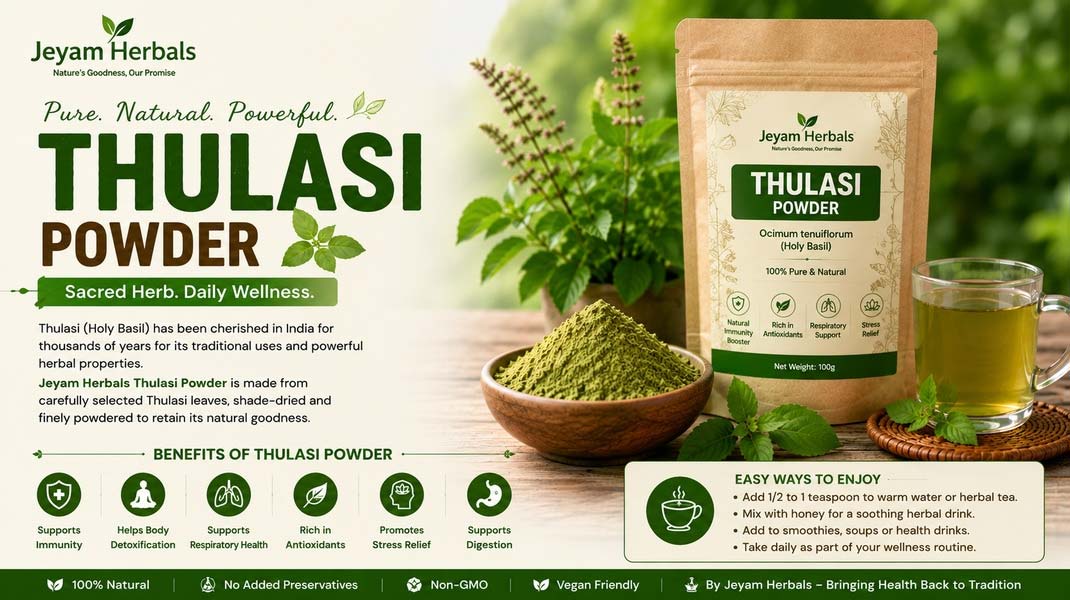
Thulasi, popularly known as Holy Basil, holds a special place in traditional Indian households. For generations, this aromatic herb has been valued in Indian traditions for its distinctive fragrance, flavour and traditional wellness applications. Known botanically as Ocimum tenuiflorum (also called Ocimum sanctum), Thulasi is widely recognised as an important herb in Ayurveda and traditional Indian practices. At Jeyam Herbals, we bring the goodness of this traditional herb in a convenient powdered form. Jeyam Herbals Thulasi Powder makes it easier to include this familiar herbal ingredient in your everyday wellness routine. Thulasi Powder is prepared from dried Thulasi leaves that are finely powdered for convenient use. Thulasi is traditionally valued for its aromatic nature and has been used in various Indian herbal preparations, teas and home remedies. Instead of collecting and drying fresh leaves, powdered Thulasi offers a convenient way to use this traditional ingredient whenever required. Thulasi has been an important part of Indian herbal traditions for centuries. Some of its traditionally recognised properties include: Thulasi contains naturally occurring plant compounds, including polyphenols and other phytochemicals. Thulasi has a long history of traditional use in herbal preparations associated with respiratory comfort. Holy Basil contains naturally occurring antioxidant compounds that have been studied for their potential biological properties. Thulasi is commonly used in traditional herbal preparations and is valued for its distinctive aroma and natural character. Powdered Thulasi makes it easier to incorporate this traditional herb into suitable food and beverage preparations. Traditional uses do not establish that Thulasi Powder can prevent, treat or cure any medical condition. Thulasi Powder can be incorporated into different preparations according to your preference and the product label. Here are a few simple ideas: Thulasi Herbal Tea: Add a suitable quantity to hot water and allow it to infuse. Honey Mix: Combine with honey as a traditional herbal preparation. Herbal Drinks: Add to suitable homemade herbal beverages. Traditional Recipes: Use in appropriate herbal preparations according to the recipe. Always follow the recommended serving instructions on the product packaging. At Jeyam Herbals, we believe in making traditional herbal ingredients convenient for modern lifestyles. Our Thulasi Powder brings together the familiarity of a traditional Indian herb and the convenience of a ready-to-use powdered preparation. Whether you are exploring traditional herbal ingredients or looking for convenient ways to use Thulasi in your daily preparations, Jeyam Herbals offers an easy way to enjoy this familiar herb. Thulasi is commonly known as Holy Basil or Sacred Basil. Its botanical name is Ocimum tenuiflorum. Thulasi Powder is made from dried Thulasi leaves that are finely powdered. It can be used in herbal tea, warm water and other suitable preparations. Follow the serving instructions provided on the product label. No. Holy Basil (Ocimum tenuiflorum) and common culinary basil (Ocimum basilicum) are different plants, although they belong to the same genus. You can explore and purchase Jeyam Herbals Thulasi Powder through our online store. Thulasi is more than just a familiar plant in Indian households. It represents a long-standing tradition of appreciating natural herbs and their place in everyday life. With Jeyam Herbals Thulasi Powder, you can conveniently bring this traditional ingredient into your herbal preparations. Jeyam Herbals – Nature's Goodness, Our Promise.Thulasi Powder – Discover the Traditional Goodness of Holy Basil
What Is Thulasi Powder?
Traditional Uses and Benefits of Thulasi
1. Rich in Natural Plant Compounds
2. Traditionally Used for Respiratory Wellness
3. Antioxidant Properties
4. Part of Traditional Wellness Practices
5. Convenient Everyday Herbal Ingredient
How to Use Thulasi Powder
Why Choose Jeyam Herbals Thulasi Powder?
Frequently Asked Questions About Thulasi Powder
1. What is Thulasi Powder called in English?
2. What is Thulasi Powder made from?
3. How can I consume Thulasi Powder?
4. Is Thulasi the same as regular basil?
5. Where can I buy Thulasi Powder?
Conclusion